




Texas Instruments DRV8885 1.5A Stepper Motor Driver
Texas Instruments DRV8885 1.5A Stepper Motor Driver is a stepper motor driver for industrial equipment applications. The device has two N-channel power MOSFET H-bridge drivers, a micro-stepping indexer, and an integrated current sense. The DRV8885 is capable of driving up to 1.5A full scale or 1.0Arms output current. The Texas Instruments DRV8885 integrated current-sense functionality eliminates the need for two external sense resistors. The STEP/DIR pins provide a simple control interface. The device can be configured in full-step up to 1/16 step modes. A low-power sleep mode is provided for very low quiescent current standby using a dedicated nSLEEP pin. Internal protection functions are provided for under-voltage, charge pump faults, overcurrent, short circuits, and overtemperature. Fault conditions are indicated by an nFAULT pin.
Features
- PWM micro-stepping stepper motor driver
- Up to 1/16 micro-stepping
- Non-circular and standard ½ step modes
- Integrated current sense functionality
- No sense resistors required
- ±6.25% full-scale current accuracy
- Slow and mixed decay options
- 8.0 to 37V operating supply voltage range
- 0.86Ω HS + LS at 24V, 25°C low RDS(ON)
- High current capacity
- 1.5A full scale per bridge
- 1.0Arms per bridge
- Low-current sleep mode (20μA)
- Fixed off-time PWM chopping
- Simple STEP/DIR interface
- Small package and footprint
- 24 HTSSOP (PowerPAD)
- Protection features
- VM Undervoltage Lockout (UVLO)
- Charge Pump Undervoltage (CPUV)
- Overcurrent Protection (OCP)
- Thermal Shutdown (TSD)
- Fault condition indication pin (nFAULT)
Applications
- Multi-function printers and scanners
- Laser beam printers
- 3D printers
- Automatic teller and money handling machines
- Video security cameras
- Office automation machines
- Factory automation and robotics
Related Development Tool
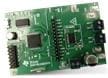
Texas Instruments DRV8885EVM Stepper Motor Driver Evaluation Module
Demonstrates the integrated current sensing capabilities and performance of the DRV8885.
Simplified Schematic

Publicado: 2016-07-11
| Actualizado: 2022-03-11